
You’ve got the skincare routine down. The haircut finally works. The fits are fitting. And yet you open your phone to check one thing and wake up 47 minutes deep in short-form content, having learned nothing, feeling slightly worse than before.
That’s being cooked. And no amount of looksmaxxing fixes it, because the stat that’s broken isn’t on your face. It’s your attention.
This is the full focusmaxxing protocol. What cooked actually looks like, why it happened, and the two-phase system that reverses it.
What Cooked Looks Like
Check yourself against the symptom list:
- You can’t watch a video without a second screen in your hand
- Reading two pages of a book feels like running a marathon
- You reach for your phone in any silence longer than three seconds
- You open apps on autopilot, forget why, close them, reopen them
- You know a hundred meme formats and zero things deeply
- Your best ideas show up in the shower, because it’s the only place your phone isn’t
Two or more of these and you’re cooked. No shame. It’s by design. But it’s also fixable.
How You Got Cooked
Short-form content is engineered to be the perfect dopamine slot machine. Infinite novelty, zero effort, instant reward, one thumb flick away. Every scroll teaches your brain that stimulation should be free and constant. Anything slow, studying, training, building, reading, an actual conversation, starts to feel physically uncomfortable by comparison.
Your attention span isn’t broken. It’s been outbid. The fix is making slow things win again, and that happens in two phases: remove the poison, then rebuild the muscle.
You can’t looksmaxx your way out of being cooked. A maxxed face with a fried attention span is a sports car with no engine.
Phase 1: Brainrot Recovery (Weeks 1 to 2)
// Detox protocol
- Delete or hard-limit the slot machines. Short-form apps gone, or capped at 15 minutes a day with app limits. Have someone else set the password. Willpower loses to engineering every single time.
- No phone for the first hour of the day. Your morning dopamine baseline sets the tone for everything after it. Scroll at 7am and you’ve already told your brain the day is about consumption.
- Replace, don’t just remove. Every deleted scroll session needs a substitute. Walk, book, gym, journal, or literally staring at a wall. Boredom is the rehab. The itch to check your phone is the withdrawal symptom, and every time you sit with it, it gets weaker.
- Grayscale your phone. Color is part of the slot machine. A gray screen is shockingly boring, which is exactly the point.
Expect day three to be the worst. The urge peaks, then it breaks. Almost everyone quits right before the break. Don’t.
The home screen audit
Your home screen is a menu you didn’t write. Rebuild it: first page holds only tools, camera, maps, notes, calendar, messages. Everything else goes into a folder on the second page, and the slot machines get deleted outright. Add one extra step between you and every time sink. Friction is the whole game. You won’t resist temptation two hundred times a day, so you engineer it away instead.
Urge surfing: the two-minute rule
When the itch to check your phone hits, do nothing for two minutes. Literally sit there. The urge rises, peaks and passes, usually inside ninety seconds. Every urge you surf weakens the loop. Every urge you obey feeds it. This is the actual rep of brainrot recovery, the way one squat is the rep of leg day.
Phase 2: Deep Work Installation (Weeks 3 to 4)

Detoxing frees up attention. Now you aim it. The system:
// Deep work build
- Start at 25 minutes. One focused block, phone in another room, single task, timer on. Add five minutes every few days. Most people can reach 90-minute blocks inside two months.
- Same time, same place. Attention loves ritual. Same desk, same hour, same opening move, and the block starts becoming automatic, like a lift you never skip.
- Track one number. Focused minutes per day. Write it down. Watch it climb like a bench PR. What gets measured gets maxxed.
- One tab rule. Every open tab is a tiny door out of the work. Close them. Your browser history should be boring.
Failure fixes for week one
The block will try to die. Pre-decide the saves:
- Block dies in the first five minutes. That’s the withdrawal talking, same itch as week one of the detox. Surf it for two minutes, then restart the timer once. If it dies twice, log the minutes you got and stop for the day. A 12-minute block you logged beats a 25-minute block you rage-quit and pretended never happened.
- You keep “needing” to look something up. Write the question in the notebook and keep working. Ninety percent of mid-block research is the slot machine wearing a trench coat. Answer it after the timer rings. Most of the time you won’t want to anymore.
- You “can’t find” 25 minutes. You found 47 minutes for short-form yesterday. Steal it back: put the block exactly where the biggest scroll session used to live, same chair, same hour. The slot is already carved out of your day. Reassign it.
- You skip a day. One skipped day is a rest day. Two is a pattern. The rule after any miss: next block happens before noon, no negotiations, even if it’s a sad little 15 minutes. Momentum matters more than the number.
Scheduling rules that actually hold
Two decisions, made once, save you hundreds of future arguments with yourself:
- Anchor the block to something that already happens every day. After coffee. After the gym. After class. “Sometime this afternoon” is where focus blocks go to die, because the afternoon always finds something more urgent.
- Define done before you start. “Work on the project” is a trap, because it’s never finished and you can always feel behind. “Draft 400 words” or “finish problem set three” ends. You need the block to end, because a finish line is what lets your brain release and recover for the next one.
// From The BossMaxx Protocol
The four weeks above are the starter build. The focusmaxxing chapter in The BossMaxx Protocol runs the full ladder: block-length progression tiers from 25 up to 120 minutes, the failure fixes for when a whole week falls apart, and the focused-minutes tracker from the tracker pack. It also shows where focus sits in the 30-day build order, because deep work compounds faster once sleep and training are already locked in.
Mindmaxxing: The Endgame
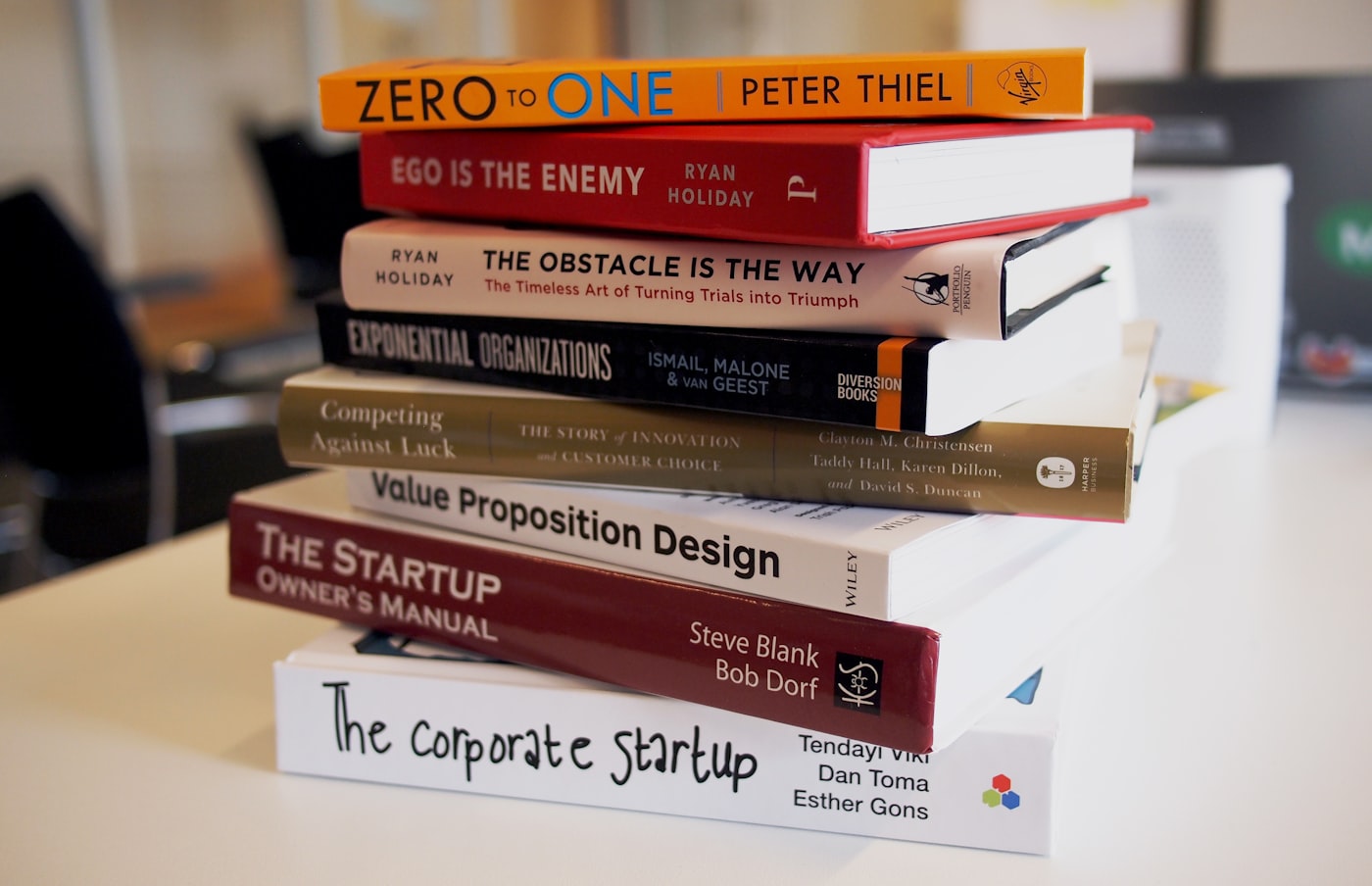
Once the baseline is back, you level up. Long-form reading is the heavy compound lift of the mind. Twenty pages a day sounds small until you realize it’s twenty-four books a year while everyone else is rewatching the same fifteen-second clips.
Start lower than your ego wants. If two pages feel like a marathon, begin at five pages a day and add two pages a week. Reading is progressive overload too, and nobody walks into the gym and benches their max on day one.
Two decision rules keep the habit alive past the honeymoon phase:
- The 50-page quit rule. A book that hasn’t earned your attention by page 50 gets dropped with zero guilt. Forcing yourself through a dead book is how reading habits die. Quit fast, start the next one the same day.
- One sentence per chapter. Finish a chapter, close the book, write one sentence about it from memory. Can’t do it? You skimmed. Reread it. That sentence is the actual rep, and after a year you own a notebook full of them.
Start with books that punch: deep work and attention, stoic philosophy, one biography of someone who built something real. Read with a pen. The notes are where the growth happens, because summarizing an idea in your own words is a rep your brain actually keeps.
What About Music and Podcasts?
Music without lyrics is fine for repetitive work and workouts. For anything that involves words, writing, studying, reading, it costs you comprehension, and the research is brutal on this point. Podcasts during “productive” chores are a gray area. One podcast a day is enrichment. Six hours of constant audio is just scrolling with your ears. If silence feels uncomfortable, that discomfort is the exact thing the protocol is training.
The Weekly Review
Once a week, ten minutes, same time. Three questions:
- How many focused minutes did I log, total?
- Where did I get cooked this week, and what triggered it?
- What is the single most important block for next week, and when is it scheduled?
Write the answers down. The review is what turns thirty random days into a training program. Without it you’re just having weeks. With it you’re compounding.
The Toolbox
Keep it minimal. Tools support the protocol, they can’t replace it:
- App blockers with schedules. Set the block before the craving, not during it.
- A kitchen timer or any physical timer for focus blocks. A ticking object on your desk beats another app on the same phone you’re avoiding.
- A paper notebook. Capture the random thoughts that ambush you mid-block. Write it down, get back to work. The thought survives, the distraction dies.
The 30-Day Focus Detox
// Community quest
Thirty days. Four rules:
- Rule 1: Short-form apps deleted or capped at 15 minutes
- Rule 2: No phone for the first hour of the day
- Rule 3: One focus block daily, minimum 25 minutes, phone in another room
- Rule 4: Read 20 pages before any evening screen time
Track one number: focused minutes per day. Post your day-30 total. Watch it embarrass your day-1 total.
The Payoff
Focusmaxxing is the quiet multiplier. With your attention back, the gym program actually gets followed. The side hustle actually gets built. Conversations get your full presence, which is, fun fact, about eighty percent of what people mean when they talk about aura.
Every boss build starts with an uncooked brain. Put the phone in another room and start your first 25-minute block today. Day one of the detox is the hardest day of the whole protocol, and it’s all downhill from there.