You know the guy. Closet full of logos, triple-digit sneakers, a hoodie that costs more than your grocery run, and he still looks like he’s wearing his older brother’s hand-me-downs. Meanwhile some other dude walks past in a plain white tee and dark jeans and the whole street turns its head.
The difference costs nothing. It’s fit. Roughly 80 percent of looking good in clothes comes down to how the fabric sits on your frame. The remaining 20 percent splits between color, grooming and the occasional flex piece. Brand is a multiplier. Fit is the base stat. A multiplier on zero is still zero.
The label lives inside the collar. The fit is what the street sees.
This is the operating manual: measurable fit checkpoints, an exact capsule list, color rules, a fragrance protocol and where your money belongs at every budget.
Fit: The Checkpoints That Actually Matter
Sizing is a lie told in letters. A medium from one brand fits like a large from another, so forget the tag and learn the physical checkpoints. Every one of them is testable in a fitting room or in front of a mirror.
Shirts and tees
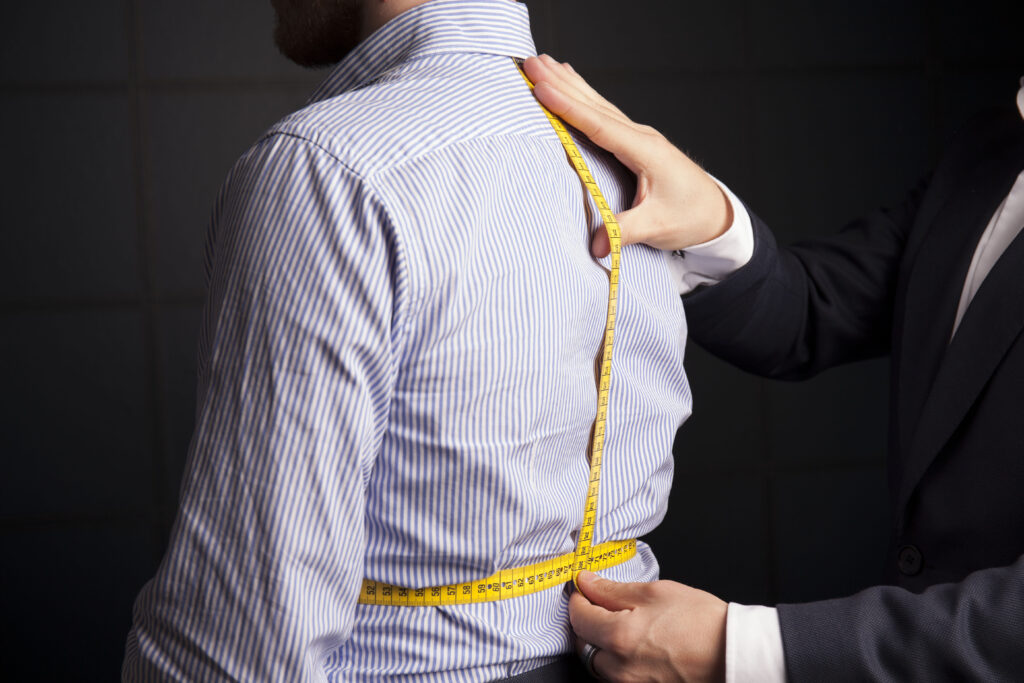
- Shoulder seam on the bone. The seam where the sleeve meets the body should sit exactly on the acromion, the bony edge of your shoulder. One centimeter past it and the shirt reads borrowed. This is the single highest-leverage checkpoint in menswear.
- Sleeve ends mid-bicep. Tee sleeves stop halfway down the upper arm and hug lightly. Flapping fabric adds imaginary weight, strangling fabric adds an imaginary gym membership.
- Collar passes the two-finger test. Buttoned, you slide two fingers between collar and neck. More room and it hangs like a curtain, less and you’re being slowly strangled.
- Hem covers the belt by 5 to 8 centimeters. Untucked, the shirt ends around mid-fly. Longer swallows your legs, shorter shows stomach every time you reach for something.
Pants
- The waist holds on its own. The pants stay up with zero belt and zero constant hiking, and you can still slide two fingers inside the waistband.
- The thigh pinch test. Standing straight, you can pinch 2 to 4 centimeters of fabric at the thigh. Beyond that you’re swimming, below it you’re spray-painted.
- One break or none. The hem kisses the top of your shoes with at most a single horizontal crease. Fabric pooling at the ankle is the most common fit crime in the wild, and the cheapest to fix: hemming runs 10 to 15 dollars at any tailor.
Jackets
- Shoulders again, and this one is law. The jacket’s shoulder must end at your shoulder. Everything else on a jacket can be tailored. Shoulders basically can’t, so this is where you walk away from the wrong size regardless of the discount.
- The button closes without an X. Buttoned, the fabric over your stomach stays flat. Stress lines radiating from the button mean size up.
- Show a centimeter of cuff. The jacket sleeve ends at the wrist bone and lets about a centimeter of shirt cuff escape. Tiny detail, disproportionate aura.
The Tailor Is the Cheat Code
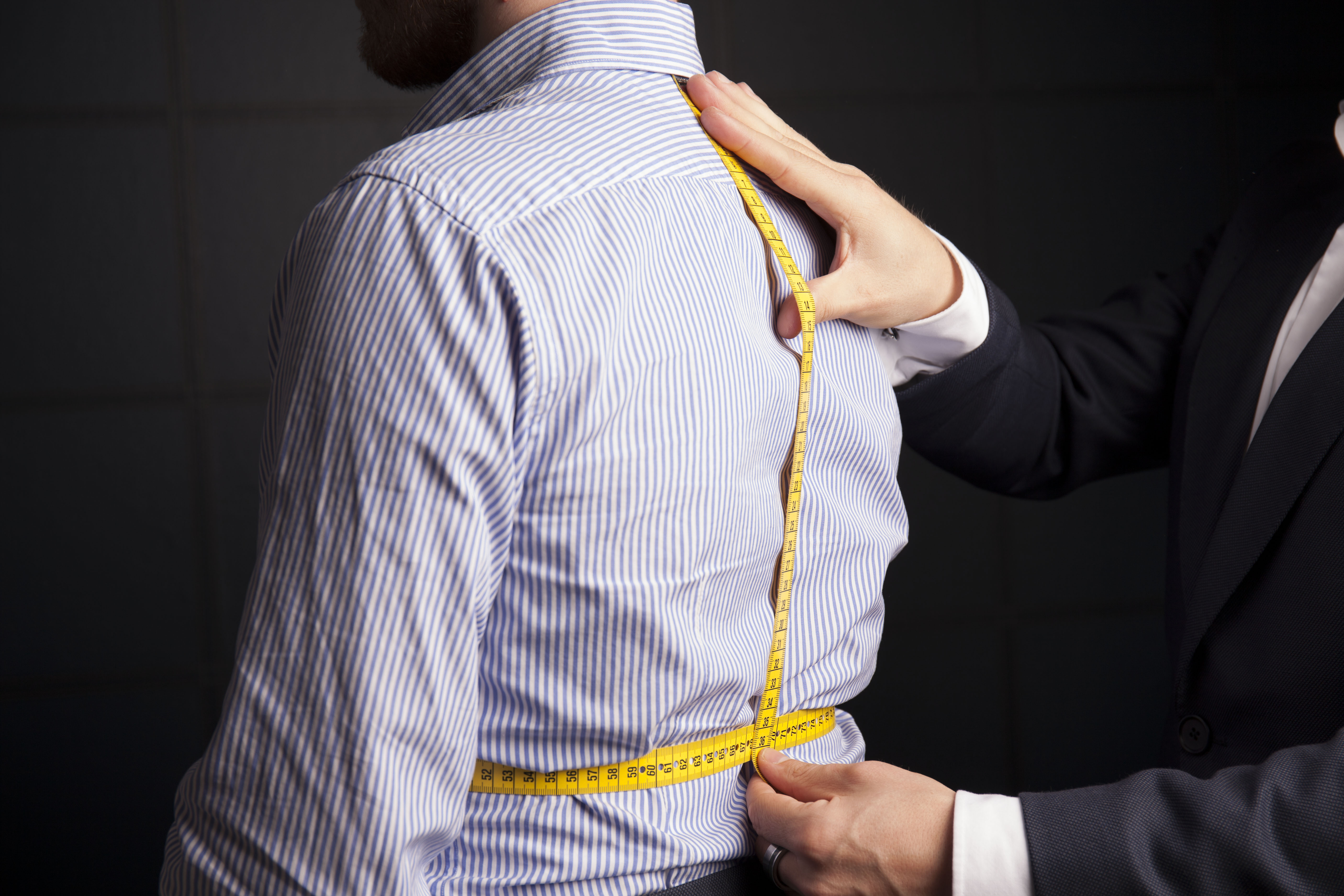
Here’s the counterintuitive part. The best-dressed guys you see are mostly wearing altered mid-price clothes, and the worst-dressed are wearing unaltered expensive ones. A 25-dollar thrifted blazer plus 40 dollars of tailoring outperforms a 400-dollar blazer straight off the rack, because tailoring builds the garment around your specific skeleton.
// The first tailor run
- Bring three items: your best trousers, your best jacket, your most-worn shirt. Fixing favorites teaches you what correct fit actually feels like on the body.
- Ask for exactly three adjustments: trouser hem (10 to 15 dollars), trouser taper below the knee (15 to 25 dollars), jacket waist suppression (30 to 50 dollars).
- Wear the altered piece for a full week before ordering more work. Your eye needs calibration time.
- Budget rule: add 20 percent to any clothing purchase as a tailoring reserve. A 100-dollar budget is really 80 dollars of garment plus 20 dollars of fit.
The Capsule Wardrobe, Itemized
Variety is how you end up with thirty pieces and nothing to wear. The fix is a capsule: a small set where everything pairs with everything. Here’s counterintuitive truth number two: owning fewer clothes makes you look better, because every combination works and morning decision fatigue dies.
The full list, with counts and colors:
- 3 plain tees: white, black, navy or grey
- 2 oxford button-downs: white and light blue
- 1 overshirt or flannel in olive or charcoal
- 2 everyday trousers: dark indigo jeans with a straight or slim taper, beige or grey chinos
- 1 pair charcoal or black wool trousers for anything dressier
- 1 grey or navy crewneck knit
- 1 navy unstructured blazer
- 1 jacket for your climate: black leather, olive field jacket or tan overcoat
- 2 pairs of shoes: white leather sneakers, brown boots or derbies
- 1 leather belt matched to the brown shoes
Fifteen pieces, north of forty outfits. The entry rule for any new item: it must pair with at least three things you already own. Pieces that fail the rule are museum exhibits, and your closet has no museum budget.
The math, in case forty sounds generous: 5 tops times 3 trouser options gives you 15 base combinations. The knit, overshirt and blazer each layer over most of the tops, and both shoe pairs work with every bottom, so the combinations stack fast. The constraint that keeps the whole thing alive is laundry: with 3 tees you wash weekly, which is a feature, because a capsule you can’t keep clean collapses by Thursday.
Color: Neutrals First, One Accent
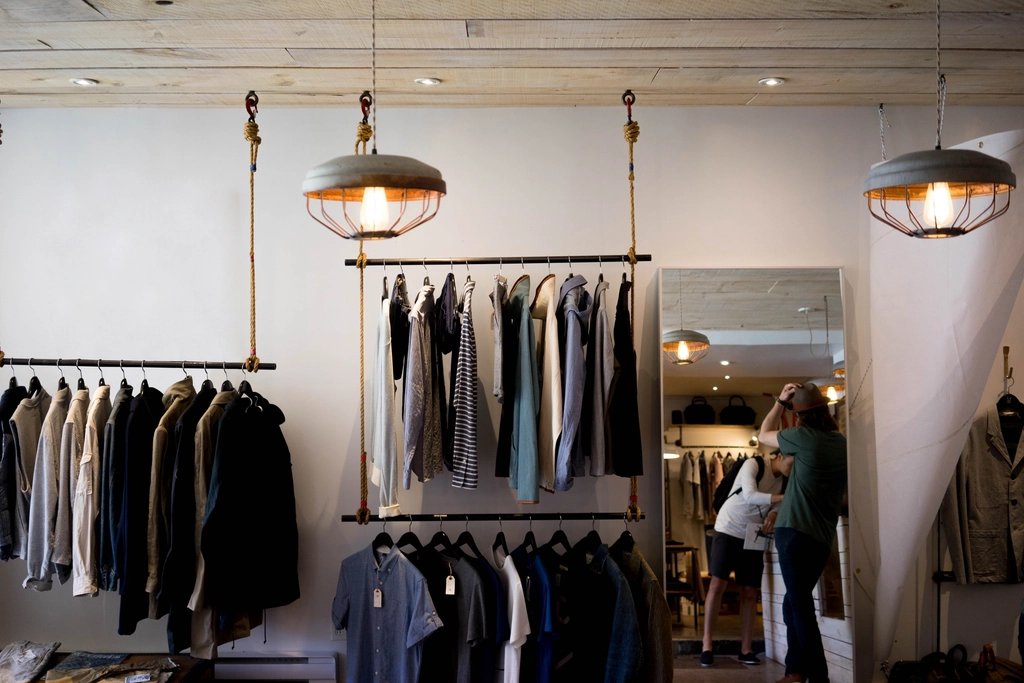
Build on neutrals: navy, grey, white, black, olive, beige. They all interlock, so getting dressed stops being a puzzle. Then add exactly one accent per outfit, a color with real saturation: burgundy, forest green, mustard, rust. One. The accent pulls the eye, the neutrals frame it. Two accents fight each other and three is a carnival.
The quick mirror check: your outfit should read as two neutrals plus one accent maximum. If you can’t name the accent color, the outfit is fine. If you can name two, take one off.
The undertone decision. Your skin picks which neutrals flatter it, and the test takes ten seconds: look at the veins on your inner wrist in daylight. Blue or purple means a cool undertone, green means warm, can’t tell means neutral and you won the genetic lottery. Cool skin glows in navy, charcoal and pure white, with burgundy or forest green as accents. Warm skin works better in olive, beige and cream, with rust or mustard as accents. Neutral skin wears everything, which explains why some guys look good in literally anything.
Failure fix: if an outfit passes every fit checkpoint and still feels off, the problem is almost always color. Swap the accent first, then the piece closest to your face. Tops frame the face, so they carry the most visual weight, and a top that fights your undertone taxes the whole outfit.
Fragrance: One Scent, Applied Like a Professional
Most guys fumble fragrance in both directions: a rotation of five bottles worn at random, or a fog cloud that enters the room three seconds before they do. The counterintuitive part: fewer sprays earn more compliments. Scent works best discovered at arm’s length during a conversation. Announced from across the room, it’s a chemical weapon.
// The signature scent protocol
- Pick one scent and commit for a season. Sample first: wear a tester for a full day, because a fragrance on your skin at hour four is a different product than at minute one.
- Apply right after showering, on moisturized skin. Hydrated skin holds scent hours longer.
- Two sprays maximum: one on the side of the neck, one on the chest under the shirt. Chest heat diffuses it slowly all day.
- Spray from 15 centimeters and let it dry. Rubbing crushes the top notes you paid for.
- Reapply once at most, after six hours, and only if you’re going out again.
Accessories That Punch Above Their Price
Accessories run on scarcity. Each one is a small signal, and signals cancel each other when they stack. The rule before the list: two accessories per outfit, three maximum, and one of them is usually the watch.
- A quiet watch. Clean dial, 38 to 40 millimeter case, leather or steel strap. A 60-dollar minimalist quartz reads classier than a gold-plated brick trying to look rich. Keep case thickness under 12 millimeters so it slides under a cuff, match the strap leather to your belt, match the metal to your other metal.
- A real leather belt in the same brown or black as your shoes, 3 to 3.5 centimeters wide for trousers, 4 for jeans. Matched leathers are the cheapest coherence upgrade available, and full-grain leather outlives the cheap bonded stuff by a decade.
- Good socks. Solid dark colors, thick enough to hold a cuff line. Ten dollars a pair, invisible when right, loud when wrong. No-show with sneakers in summer, ribbed crew with boots. Black athletic socks with white sneakers is a crime with witnesses.
- One piece of metal. A plain chain, a simple ring or a thin bracelet. Pick one per outfit and let it be the whole jewelry department. A 45 to 50 centimeter chain sits at the collarbone, which is where it belongs. Match metals: silver with silver, gold with gold, and if you mix them, keep one dominant.
The failure mode is accumulation. If you catch yourself reaching for a fourth piece, take one off instead. The guy with one good watch looks deliberate. The guy wearing five things looks like he got dressed inside the accessories drawer.
Where the Money Goes: Three Budget Tiers
Style scales with budget in a specific order. Shoes and outerwear broadcast quality first, so they eat the budget first.
// From The BossMaxx Protocol
The looksmaxxing chapter runs this same logic across the full stack: grooming tiers, hair decisions by face shape, posture fixes, and the order to tackle them in. It also shows where style slots into the 30-day build order next to the other five pillars, and the tracker pack has a fit audit sheet that turns the quest below into checkboxes. The BossMaxx Protocol
The 30-Day Fit Audit
// Community quest
Thirty days, four rules:
- Rule 1: Photograph every outfit in the mirror before you leave. One photo per day, every day.
- Rule 2: Every top you wear must pass the shoulder seam check. Any failure goes straight into the audit pile.
- Rule 3: One item per week leaves the house: tailored, donated or sold.
- Rule 4: Zero new clothing purchases until day 30. You shop your own closet first.
Track two numbers: outfits photographed (target 30) and items fixed or ejected (target 4). By day 30 you own a personal fit database, a leaner closet and an eye that catches a bad seam from across the room.
The First Rep
Style is a skill with a fast feedback loop, and the loop starts at the mirror. Every checkpoint in this article is testable in under a minute, and every fix is cheaper than the mistake it replaces.
Tonight, pull every top out of your closet, line them up and run the shoulder seam test on each one. The failures go in a bag. That’s rep one.