
You know the state. It’s 1 a.m., your body is wrecked, and your brain is running a highlight reel of everything you said today. Tired and wired at the same time, a special kind of cooked. Coffee fixed nothing. Scrolling made it worse.
That state has a mechanism, and the mechanism has an off switch. The hormone running the show is cortisol, and the guys who stay sharp under pressure share one trait: they trained their way back to baseline. Here’s the full system, from the biology to the daily reps.
The Alarm Hormone, In Plain English
Cortisol is your body’s chemical alarm, released by your adrenal glands on command from the brain. In short bursts it’s a feature. It wakes you up in the morning, mobilizes fuel for a lift, sharpens your attention before a presentation. Acute cortisol is the reason you can sprint for a bus or lock in during a final.
The problem is chronic. Your stress response evolved for threats that end: the predator leaves, the storm passes, cortisol drops. Modern threats never end. The inbox refills. The group chat glows at midnight. The feed serves you a fresh emergency every forty seconds. Your brain reads each one as a predator, and the alarm never gets to complete its cycle.
// The counterintuitive part
The damage comes from an alarm that never switches off, so the stat worth training is recovery speed: how fast you return to baseline after the spike. Stress itself is the gym. The downshift is the muscle.
This is why “avoid stress” is a dead-end strategy. A life with zero stress is a life with zero stimulus, and it would make you fragile. The resilient guys still get spiked by deadlines, arguments and bad news. The difference is their nervous system returns to baseline in minutes instead of marinating for days. That return is trainable, with literal reps.
The Downshift Toolkit
Four tools, ordered by how fast they work. The first one takes sixty seconds and fits in your pocket forever.
1. The physiological sigh
The fastest known lever for dropping arousal in real time, and it looks like nothing. Researchers at Stanford tested five minutes of daily “cyclic sighing” against mindfulness meditation and the sighing won on mood and arousal reduction. Here’s the exact pattern:
// The physiological sigh
- Inhale through your nose until your lungs feel about 80 percent full.
- Top up with a second, shorter sniff through the nose. Lungs completely full now.
- Exhale slow and long through your mouth, like fogging a window, until empty.
- Repeat 1 to 3 rounds for an acute spike: before a hard conversation, after a rage bait headline, mid-panic.
- Train 5 minutes daily, same time each day, to lower your baseline. This is the compounding version.
Why it works: the double inhale re-inflates the collapsed air sacs in your lungs, and the long exhale slows your heart rate through the vagus nerve directly. You’re hacking the hardware, bypassing the thinking brain entirely. It works even when you’re too wound up to “think positive.”
2. NSDR: the ten-minute system reboot
Non-sleep deep rest, known in yoga studios as yoga nidra, is a guided body scan you do lying down, eyes closed. Ten to twenty minutes. Free audio scripts are all over YouTube and podcast apps. The protocol:
- Lie on your back, phone playing the script, notifications off.
- Follow the audio as it walks your attention through the body, part by part.
- Stay still. If you fall asleep, you needed the sleep. Count it as a win.
- Best slots: after lunch instead of a third coffee, or right after work as a hard reset.
Post-lunch NSDR is one of the highest-leverage swaps available to a tired person. Twenty minutes of it beats twenty minutes of reclined scrolling by an embarrassing margin, and it trains the same downshift pathway as the sigh.
3. The phone-free walk
Twenty to thirty minutes, outside, no podcast, no music, no call. Just walking and looking around. The mechanism is optic flow: your eyes moving steadily past the environment sends a signal to the brainstem that the threat has passed and you’re literally moving away from it. It’s the oldest downregulation circuit you own.
Fair warning: the first five minutes feel unbearably boring. Your hand will reach for your pocket. That boredom is the withdrawal symptom, and pushing through it is the rep. By minute ten your mind starts filing the day’s paperwork on its own.

4. Sauna and cold, used on the right sides of the clock
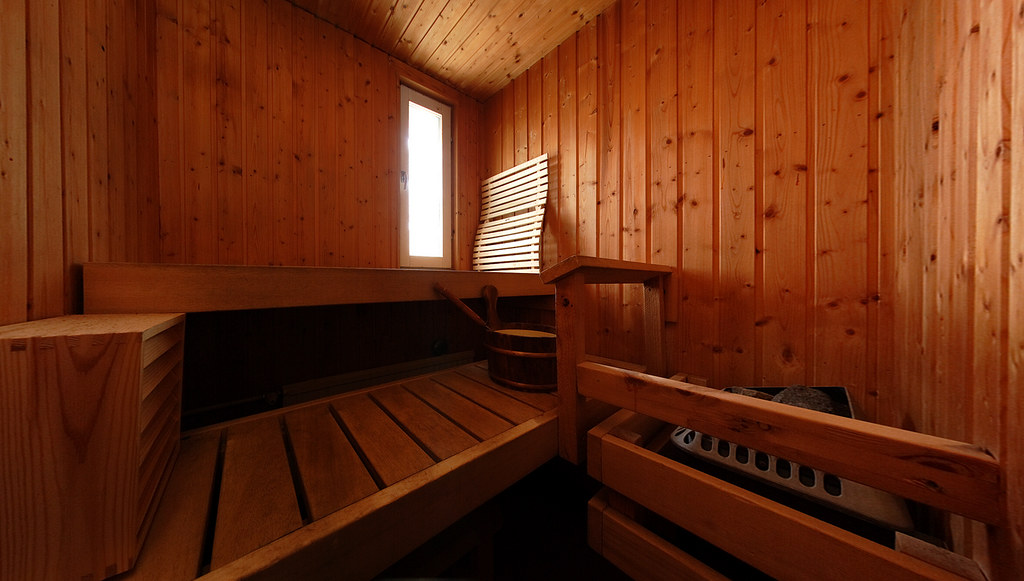
Both work, and most people get the timing backwards. Heat is your evening tool: 15 to 20 minutes in a sauna, 2 to 4 rounds with cool-down breaks, reliably lowers cortisol and nudges your core temperature into the post-sauna drop that makes you sleepy. Cold is your morning tool: a 1 to 3 minute cold finish on your shower spikes cortisol and adrenaline acutely, which is exactly the alertness you want at 7 a.m.
Cold exposure at night fights your own wind-down. Save the ice for sunrise, and let the heat close the day.
Which tool, when
Run the decision like this. Spike happening right now, heart pounding, meeting in five minutes: physiological sigh, three rounds. Fried but functional, an afternoon to salvage: NSDR, ten to twenty minutes. Low-grade hum that follows you from room to room: phone-free walk, twenty minutes minimum. End of the day, body still buzzing: sauna, or a hot shower if you have no sauna access. Match the tool to the size of the fire. A walk is the wrong weapon for a panic spike, and NSDR is overkill for a Tuesday-afternoon slump.
One failure fix covers all four: the rep counts even when it feels like it did nothing. Downshifting is a skill with a learning curve of roughly two weeks. Your first five sigh sessions may produce zero noticeable effect. Run them anyway. The guys who quit at session four are the ones still cooked at 1 a.m. a year from now.
// From The BossMaxx Protocol
The relaxmaxxing chapter takes this toolkit further: three progression tiers from acute firefighting to a fully trained baseline, a week-by-week downshift schedule, and trackers for resting heart rate and session streaks so you can watch the number drop. It also slots these reps into the 30-day build order, so stress control compounds with your sleep and training instead of competing with them for willpower. The BossMaxx Protocol
Boundaries Are a Skill, Train Them Like One
The toolkit handles the alarm after it fires. Boundaries reduce how often it fires in the first place. Three of them, in priority order:
Failure fixes, because all three boundaries get tested. If the cutoff slips, reset the next day at the normal time. One broken evening is a data point; two in a row means the cutoff time is unrealistic, so move it 30 minutes later instead of abandoning it. If a boss or client messages after hours, answer with a time: “On it first thing tomorrow, I’ll have it to you by 10.” That’s a boundary wrapped in a delivery date, and it survives almost every workplace. If the no script jams in your throat, buy time instead: “Let me check my week and get back to you.” Then send the no by text, where it comes out easier.
None of these require courage so much as repetition. The first cutoff feels wrong. The fifth feels like oxygen.
The Weekly Off-Grid Hour
One hour per week, scheduled like a meeting, phone in a drawer in another room. One analog activity: walk, lift, cook, play an instrument, read a paper book, fix something. The only rule: no documenting it. It stays off the internet, which is what makes it real.
“Scheduled like a meeting” means an actual calendar entry with a start and end time, same slot each week if your life allows it. Sunday morning works for most schedules. Pick the activity in advance so you never burn the first ten minutes deciding, and keep the bar low: a slow walk around the block counts, an ambitious woodworking project is optional. The only failure mode that matters is the phone. Drawer, other room, powered off if your willpower is having a rough week. If you catch yourself checking the time on it, go full airplane mode next week.
The point runs deeper than rest. You’re proving to your own nervous system, with evidence, that the world survives an hour without you. Every group chat continued. Every email waited. That proof is what loosens the grip the other 167 hours have on you.
The Reframe That Makes It Stick
Calm gets marketed as a personality type, some people born serene while you’re over here clenching your jaw in traffic. That’s backwards. Calm is a trained capacity, built from small boring reps: sighs, walks, cutoffs, one quiet hour a week. The serene people you admire ran their reps years ago and kept going.
Recovery speed is the stat. Everything else is weather.
Your jaw, your sleep, your patience with people you like: they all improve as a side effect of a faster downshift. You keep the ambition and the edge. You drop the 1 a.m. highlight reel.
The 30-Day Downshift
// Community quest
Thirty days. Five rules:
- Rule 1: Five minutes of cyclic sighing daily, same time every day.
- Rule 2: One 20-minute phone-free walk per day. No audio.
- Rule 3: A declared work cutoff time, honored six days a week.
- Rule 4: One off-grid hour per week, phone in another room.
- Rule 5: Day 1 notification audit. Everything without a human behind it goes.
Track two numbers: your morning resting heart rate and your completed sigh sessions. Most guys see the heart rate trend down within three weeks, and the day-30 version of you falls asleep faster than the day-1 version ever did.
Start with the smallest rep in the whole system, right now: one physiological sigh. Big inhale through the nose, short top-up sniff, long slow exhale through the mouth. Three rounds. That’s rep one of your new baseline.